Teacher Appreciation Week – And How It Got Me Thinking

If you’re friends with me on Facebook, you know I’ve spent the better part of this week posting acknowledgements and appreciation for the best of my teachers.  And I didn’t even get to all of them.

Even the worst of my teachers had something to offer, if nothing more than how to deal with a person in authority who doesn’t know how to do his or her job or with whom you do not get along:  a truly vital life lesson.

Part of my respect for the profession of education arises from the fact that both of my parents were educators.

My mother taught elementary school for a very short time.  She graduated from college in 1957 and soon thereafter married my father, and when she became pregnant with my oldest brother, the principal called her into his office and requested that she begin her maternity leave at spring break rather than finishing out the year.  My brother was due in July, and my mother was counting on working until June.  But the principal insisted that she go because she was starting to “show” and he didn’t want the children asking questions.  Different world, huh?  She never did go back to teaching in an elementary school, but she taught ESL classes to adults for years and considered her work as a mother of three to be just as important as any she had done in a classroom.

My father taught middle school and then moved up the ladder into administration, ending his career as the well-liked and much admired principal of an elementary school in the Bronx, New York.  Now well into his 70s, he is still active in the teachers’ and administrators’ organizations.

I never needed anyone to tell me that teachers worked really hard and didn’t make much money.  It was no big mystery to me that teachers (and yes, principals) bring home wads and scads and piles of paperwork that take hours to slog through.  You didn’t have to tell me that teachers took summer jobs to make ends meet and attended seminars and night school to maintain their credentials.

My one big teenage rebellion was that I was NOT going to become a teacher (well, that, and posters of guys wearing makeup).  Stupid.  I’ve spent most of my adult life regretting it and trying to get people to let me work in their classrooms.  I have friends who say I’m a natural born teacher, and that makes me proud.

If I am, it’s because I have good genes.

Posted in Uncategorized | Tagged , , , , , , | Leave a comment

Help! I Need A Genre!

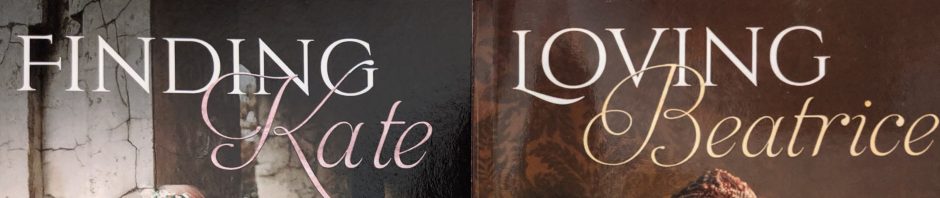
I am looking for an agent to represent “Finding Kate,” my adaptation of Shakespeare’s “The Taming of the Shrew” and in the last week or so, I’ve been doing a lot of research to that end.

And I’m in a little bit of a panic.

I had originally conceived of ”Kate” as a young adult novel, because the characters are young and the story is very much one of self-discovery.

But at an SCBWI conference, a very well-respected agent told me flat-out, “Teens don’t read Shakespeare.  Teens don’t buy Shakespeare.”

When I tried to push back with, “Their parents do,” she replied, “Teens don’t read books their parents buy for them.”

Ouch.

That, combined with the fact that every woman I have ever spoken to about this gushes “Oh! I would love to read that!” made me think that maybe I was trying to reach the wrong audience.

So I rewrote and started in on my adult market research.

But here’s the thing.

“Kate” doesn’t fit any one genre.

The setting is historical, but historical fiction for the adult market tends to be terribly serious.  It generally opens with an incident in the main character’s childhood which either illustrates a theme or introduces the love interest.  It then jumps ahead in time to the teen years (which for the middle ages were really the dawn of adulthood) and there is an arranged marriage, pregnancy and childbirth, and in the middle of this there is war and death and hardship and more hardship and maybe an illicit love affair, and ultimately some kind of grand resolution years later.  While there may be moments of joy, historical novels are not generally known to be light-hearted and amusing.

“Kate” is historical, but it’s funny and fast-paced.  It jumps right into the middle of her problems in the here-and-now and solves them in ten days.  So although it’s got a historical setting, it’s really more of a comedy with a couple at the heart of it.  A romantic comedy, if you will.

So I looked up romantic comedies on Goodreads.  There are pages and pages of books tagged as romantic comedies, but they are all, without exception, contemporary.  I’ve read several of them.  You know the ones:  your books by Meg Cabot, your “Shopaholic” series, your “Bridget Jones’ Diary”s…   While their tone is exactly right, their setting is completely wrong.  Their covers are graced with bright colors and icons of the modern world:  shopping bags, cupcakes, coffee cups, high heeled shoes.  A woman looking for a contemporary romantic comedy in a store is probably not going to be attracted by a book with medieval Kate on the cover in her silk and velvet gown.

Ah!  A gown on the cover:  historical romance.  Historical romances, while set in the right time frame and with the right images on the cover, are pretty much all about the sex.  The setting is just there to get beautiful people into beautiful clothes… and then out of them again in a variety of interesting ways.  And there is nary a ripped bodice nor a throbbing manhood in my novel.  Lots of flirting, lots of wordplay, but no sex.  Sorry.

And this worries me because publishing is a business, and as much as they are looking for good work, they also want to be able to slide it into a genre, a label, a defined category.  They want to know which shelf in the bookstore to put it on, which keywords in the search engine will find it, which people to market it to.  And who can blame them?

I have a historical romantic comedy.  Anyone looking for one of those?

Posted in Uncategorized | Tagged , , , , , , , , , , , | 9 Comments

YA Historical “The Wicked and the Just”: You Want This Book

I just found out that it has been a year since this wonderful book was published, so we are going to celebrate that anniversary (and the looming publication of its paperback version) with my long-overdue review.

J. Anderson Coats' "The Wicked And The Just" - My Very Own Author-Signed Copy!

J. Anderson Coats’ “The Wicked And The Just” – My Very Own Author-Signed Copy!

Near the end of the 13th century, King Edward I of England brought Wales under English dominion.  He constructed a series of castles and fortified towns which make up many of the iconic ruins tourists visit to this day. Then he encouraged his nobles to move there to maintain the peace and quell the populace in case they got any notions about wresting back control.

Thus, a landless lord could find the status, wealth and property in Wales that he could not have in England.

Cecily’s father decides to try his luck with King Edward’s scheme. Cecily is less than overjoyed: “Tonight at supper, over capon and relish, my father ruined my life.”

Furious at her father for uprooting her from the life she knows and loves, she swears she will never speak to him again; she will not eat. She flounces down to dinner, determined to ignore him and eat nothing. And yet, as she eats – EATS — in silence, her father merely observes how delightfully quiet it has become.

I adore Cecily. How can you not love someone this wonderfully self-centered, this charmingly unaware of her own faults, this wickedly spoiled, this sure-to-be-set-down arrogant? You can’t help but laugh, and you know within moments that Cecily’s journey will be fun to watch.

Upon the family’s arrival in Caernarvon, a walled city in Wales, we meet Gwenhwyfar, another indelible personality. Gwenhwyfar — or Gwenny, as Cecily calls her, uncomfortable with the “barbaric” Welsh tongue — becomes a maid in Cecily’s house because, with the English occupation, life has turned upside down and Gwen’s family needs the money.

I adore Gwenhwyfar too, though she is a tougher nut to crack. She doesn’t want your love; in fact, she doesn’t want anything to do with you. Her fury at her situation burns through every word of her spare prose; her resentment bristles in every clipped, sharp line. “Almost a bucket of milk,” she says, getting ready to pay the English tax collectors. “Mayhap it will be enough… Bucket in my hand sways like a hanged man as I set off…” 

But it turns out that Gwenhwyfar and Cecily need each other. One motif of medieval philosophy is the ever turning Wheel of Fortune, and if one day you are happily up on top, the next day, you can be down at the bottom. In this book, Fortune’s Wheel keeps spinning — you can almost hear it grinding away over your shoulder as you read — and wealthy Cecily, who thinks she suffered in coming to Caernarvon, learns to her sorrow what real suffering is. And while their fortunes shift and change, the girls learn about themselves: who they truly are (not always a pleasant discovery) and who they want to become.

One of the best things about this book is its universality. Teenage girls are teenage girls, whether it’s 1293 or 2013, and Coats has captured the emotional truth of that here. Gwen and Cecily are real, relatable girls despite the fact that the world they live in is as foreign to most of today’s teens as the surface of Pluto. But their struggles? Their fears? Their strength and their growth? These are things that every girl can understand.

Also, the history here is palpable. Every page is steeped in it, and yet it is handled so skillfully you don’t feel bludgeoned by it.  A pet peeve of mine is the manner in which so many historical novelists explain things that their characters would take for granted. (How many times have you needed to explain to someone what a cell phone is?) Yet too many historical novelists feel compelled to describe in detail period clothing or food.  This drives me crazy as a reader. In contrast, Coats writes with tremendous knowledge but also with tremendous respect for her readers.

Let me offer an example from the very first page. Simply by its tone, you should be able to tell it’s Cecily speaking. She is angry with her father about the move to Wales.

“I’m in my chamber now. I will never speak to him again.

Unless he buys me a new pelisson for the journey.”

First of all, you should be laughing. But aside from that, I ask you, what is a “pelisson”?  Do you know?

From the context, I can surmise that a pelisson is an article of clothing. From reading Jane Austen, I know that a “pelisse” is a kind of jacket. So, I’m fairly comfortable thinking it’s some kind of jackety-thingy.

And if I really want, in a few keystrokes I can look it up on the internet (which I did).

So I’m good. Because what matters here is what these two beautiful lines tell me about Cecily.

But how many times have you read a book where the author feels compelled to do more: ”Unless he buys me a new pelisson, which is a fur waistcoat, for the journey.”  Oh, author, you just killed it. And not in a good way.

In “The Wicked and the Just,” we learn about 13th century Wales, not because the author beats us down with details, but because she requires us to get involved. She demands that I live in Caernarvon too:  that I pull on my kirtle (and my pelisson), milk my cow and wade through the mud to pay my taxes along with everyone else.

That is a tremendous gift, one of the many Coats has to offer. You want this book.

“The Wicked and the Just” by J. Anderson Coats; Harcourt; 2012. Find the author here: http://www.jandersoncoats.com/

Posted in Book Reviews, Uncategorized | Tagged , , , , | Leave a comment

Where Are The Political Songs?

The kids of the 1980s were reviled as the “me” generation, with their “greed is good” mantra and their self-absorption.

But at the same time, we loved some great political music.

We grew up in the shadow of the Cold War, so we lived with fallout shelters and bomb drills, with the Russians (that’s the U.S.S.R., FYI) as the great enemy, with Communism as the creeping blight on the world. We also lived in the era of Reaganomics, and with the knowledge that we were the first generation in years who were not going to do better than our parents had:  the first generation for whom the American Dream (or should I say, the American Assumption of ever-increasing prosperity) was called into doubt.

Greedy?  No.  Pissed off?  Yes.

The pop music of the 80s had lots of songs about war – the threat of nuclear war, the thought that mass armament would somehow keep us all peaceful.  It also had lots of songs about politics and what political leaders around the world were doing:  building military arsenals, committing or ignoring human rights violations, crushing the rights of their citizens.

Help me list the politically minded songs of the 80s — these are just off the top of my head:

“Land of Confusion” by Genesis (the video with its Ron and Nancy Reagan puppets was pretty awesome!)

Pretty much anything by the Clash, but let’s pick “London Calling” as exemplary

“Sunday Bloody Sunday,” “Mothers of the Disappeared,” and about half of U2′s songs

“Russians,” “They Dance Alone,” “Children’s Crusade” by Sting

“Two Tribes” by Frankie Goes To Hollywood

“What’s So Funny ‘Bout Peace, Love and Understanding?” by Elvis Costello

“The Wall” by Pink Floyd (which took on society as a whole – not just war, but everything we took for granted because, “all in all, you’re just another brick in the wall.”)

“99 Luftballons” by Neneh

“Sun City,” “We Are The World,” and “Do They Know It’s Christmas?” by super-groups of recording artists uniting for a cause:  famine, apartheid.

“Red Rain,” by Peter Gabriel (although it is not as explicitly political as some of his songs like “Biko” or ”Wallflower,” this song has achieved anthem status for human rights causes)

My daughter, who is 14, has never known a time when her country was not embroiled in a war overseas.  September 11, 2001, was her first day of preschool; she was 3.

War is the new normal.

And yet, her generation does not protest.  They don’t worry, they don’t fight it.

Their pop music is about sex and love, like pop music always is, and if there’s an undercurrent to it, it’s one of violence.

There’s no one on the radio singing about the (malfunctioning) government or war or politics.  There’s no one winning Grammys for challenging the status quo.

Can you think of any?

There is one song, “Some Nights” by fun., which seems to allude the Iraq/Afghanistan war with these lyrics:  “Ten years of this and I’m not sure if anybody understands… Who the f**k wants to die alone, all dried up in the desert sun.”  But the video uses the imagery of another war, the American Civil War, instead, so it’s not clear what they are trying to say, if anything, about current politics.  Maybe they didn’t want to go there.

Green Day is the only band I can think of making politically charged music right now, and they are decidedly not of this generation.  In fact, the members of Green Day are old enough to be their parents.

My daughter (who loves Green Day, by the way) says that no one her age talks about the war.  That it’s never brought up in school, that they never hear about it, that they don’t know anything about it.

The 60s had Woodstock, and mass protests against the VietNam War.  In the 80s, we were still singing along with songs about war and injustice.

Now, it seems, the kids aren’t even talking about it.  If someone wrote a song, would they even listen?

Posted in Uncategorized | Tagged , , | 3 Comments

2012: A Year In Reading

In previous years, I’ve seen lots of bloggers write posts in January about all the books they read the previous year and the goals they’re setting for the coming year.

I always wondered how they managed to do it, and then realized, “Duh, they’re keeping a list.”

So this past year, in 2012, I decided to play along.  I logged just about everything I read in Goodreads (if you’ve been following me, you saw them down there in the corner) and I kept a spreadsheet (my husband is so proud of me; finally, a list kept on the computer instead of on a legal pad!)

I have to admit, I didn’t record everything.  I didn’t keep track of the “junk food” books — the bodice-rippers I tore through in one night, the “chick lit” I picked up at the library on a whim. And I’m sure I lost a few good books in the cracks by simply forgetting to write them down.  I read quickly and voraciously, often multiple books at once.

In addition, I wouldn’t call 2012 a typical year.  It was not an easy year in my personal life, so I probably read fewer books than I would have otherwise.  I certainly didn’t write as much as I wanted to.

Here are my results for the year, imperfect as they are.

Out of 62 books started, I completed 54 of them.  With some of the ones I didn’t finish, I just didn’t like them; for others, they were huge, dense non-fiction and I just… couldn’t… make it…

Still, 54 books.  That’s just over one book per week.  Not too shabby, especially considering what kind of year it was.

Looking over the titles, I read a lot of great YA historical fiction and historical fantasy.

J. Anderson Coats‘ debut “The Wicked and the Just” is a stellar piece of historical fiction with two unique main characters, each with a vibrant individual voice and a moving personal story.  Which reminds me, J, I still owe you that review I promised you.

I devoured the first two parts of Elizabeth Bunce’s wonderful “Thief Errant” YA fantasy trilogy, ”Starcrossed” and “Liar’s Moon.” That this trilogy may remain incomplete is an astonishing publishing travesty. You can read my rant about that here.

I discovered “Bewitching Season” and “Betraying Season,” Marissa Doyle’s delightful blend of Victorian England and magic while browsing in the YA section of my library this year.  Then, I was fortunate enough to win an ARC of the prequel “Courtship and Curses” signed by the author herself.  You can read my review of “Courtship” and get a peek at all the awesome swag the marvelous Ms. Doyle sent me here.

I also loved “The False Prince” (MG fantasy) — and more importantly, my son loved it too — and thought “13 Reasons Why” was one of the most powerful contemporary YA books I’ve read in a very long time.  I was captivated by the debut of Robin LaFevers’ “His Fair Assassin” series — assassin nuns in 15th century Brittany; what’s not to love? — and the uniqueness of Elisa, the heroine of the “Fire and Thorns” trilogy (the third book comes out in fall 2013).

I enjoyed but didn’t love the wildly popular “The Night Circus;” it was as insubstantial as cotton fluff to me.  I did love “Gone Girl” for its crisp writing, its twisty plotting and its sharp observations about what it means to be a woman and a wife in this culture.  And in the “Which Hilary Mantel book do you like better?” discussion, I am firmly in the “Wolf Hall” camp, although I did enjoy “Bring Up The Bodies” this year and can’t wait for the concluding third book (which I suspect she intended to be the last hundred or so pages of “BUTB” but her publishers said, “NO! Split that one book into two so we can all make more money.  You know, like they’re doing with all those movies!”)

What about you?  What stellar reads did you discover this year (even if they came out years ago)?  What new authors debuted this year that you will now follow wherever they lead?  Were there any books that everyone raved about that you thought were just okay — or lived up to the hype? Share your thoughts in the comments so I can start building my “to read” list for 2013!

Posted in Uncategorized | Tagged , , , | 2 Comments

Why The Dowager Countess Should Have Supported Lady Edith

Tell me, in all the commotion at the altar while Edith’s happiness was collapsing, when the Dowager Countess came striding forward to intervene, what did you expect her to say?

“Stop this nonsense, Sir Anthony, and get on with it?”

Or, “Give it up, Edith, you know it’s for the best.”

I have to say, I was expecting her to give Sir Anthony a good talking to, now that the moment had come and he was causing her granddaughter pain and humiliation there at the altar.  I was shocked that she would tell Edith to walk away and give up.

Because after all, it left Edith, in her own words, “a useful spinster.”

And who wants that for their grandchild?

In those days, the only path to social acceptance and happiness for a woman of Lady Edith’s standing was marriage.  And Sir Anthony, as mature as he was, was — as Earl Robert had observed earlier in the episode — the most “traditional” of all three men the Crawley girls had chosen.

Not only was Edith in love, but long before the dreaded “wheelchair” future everyone was harping on, she would have become a mother (in the days before birth control, that was a virtual certainty), and presided over a large house in the manner she had been raised to do.  In other words, she would have had the full life she had expected and longed for.  Does anyone really believe that Sir Anthony and Lady Edith could not have afforded the very best of care for Sir Anthony in his declining years, including strapping footmen to push his wheelchair and nurses to tend his needs?  Lady Edith has shown neither the desire nor the knack for a glittering life as a society dame at the heart of London, which is what she would lose in having a husband who could not go out.  And when, Sir Anthony eventually predeceased her, she would have had her children to comfort and occupy her.  Moreover, as the canny Dowager Countess should have had firmly in view, the life of a wealthy widow was one of more freedom than any other a woman could possibly enjoy.

Thus, Edith’s marriage to Sir Anthony was by far the better alternative to remaining single in her father’s house, particularly when the earl’s financial position was so shaky.  As she grew older and if his fortunes continued to decline, her chances of marrying would continue to diminish, and in a world where she COULD NOT find fulfillment through work (Isobel Crawley aside — remember, she is a respectable widow, not an unmarried lady of good family), Edith would have to live out her life caring for her aging parents and never realizing her own potential as a human being in any manner.

It is quite out of character for the Dowager Countess not to have made this analysis herself.

Do you agree?

Posted in Uncategorized | Tagged , , , | 2 Comments

Happy Holidays!

As a thank you for stopping by from time to time, here’s a simple and totally yummy recipe for a perfectly seasonal cookie.

Whatever you celebrate — and for me, it boils down to the persistence of hope — may your holiday season be peaceful, restful, and full of whatever makes you happy.

Especially cookies.

Peppermint Chocolate Chip Drops

2 egg whites (at room temperature)

1/8 teaspoon cream of tartar

1/2 cup sugar

1/2 mini chocolate chips

1/4 cup finely crushed peppermint candies (about 4 candy canes)

Preheat oven to 250 and line cookie sheets with parchment paper.

In a medium mixing bowl (copper if you have it), combine the egg whites and cream of tartar. Beat at high speed until soft peaks begin to form. Continue beating at high speed, adding sugar one tablespoon at a time. Beat until stiff peaks form. With a plastic spatula, fold in chips and candy.

Drop by rounded teaspoons onto cookie sheets about 2 inches apart. Bake 25-30 minutes. Cookies are done when dry and not brown.  Cool completely before removing from paper.

Makes about 2 dozen.

(Recipe from “Cookies! A Cookie Lover’s Collection” (c) 1994 Cy DeCosse Inc.)

Posted in Uncategorized | Tagged , , , | Leave a comment

The “X” Factor

Full Disclosure:  I don’t actually watch “The X Factor” but I had to borrow the title for this post.  I do watch “The Voice” which inspired this post.  I watched “American Idol” for years but my tolerance for it has waned; I don’t plan on watching this coming season.

With these “reality competition” singing shows, one can’t help noticing something about the relative level of talent between the judges and the contestants.

That is, for the most part, the contestants have it and the judges don’t.

Yes, Steven Tyler can sing-scream like no one else, and you would certainly “put him through to the next round.”  And Christina Aguilera has a voice that can shatter glass and break your heart if you close your eyes and listen, rather than looking at the bizarre creature she has made of herself.

But Jennifer Lopez?  Britney Spears?  Demi Lovato?

Blake Shelton?

When he takes the stage to sing, I am astonished at how completely ordinary his voice is.  And since he is a judge on a show called “The Voice,” I find this painfully ironic.

I suspect he does too.

Another Full Disclosure:  I am not a fan of country music.  Far from it.  Although some of my favorite music has a country flavor (Augustana, Mumford and Sons, Matt Nathanson, even some of R.E.M.), I am not a fan of Jesus-take-the-wheel-while-I-kick-the-lights-out-of-my-good-for-nothing-cheatin’-honky-tonk-ex-boyfriend’s-truck-’cause-he’s-sleeping-with-my-sister country music.  And when I started watching “The Voice,” I was not a fan of Blake’s “aw shucks, m’am” demeanor.

But what I came to realize is that, behind that façade lies a very canny, very smart man.

He uses his country charm and good looks to disarm and then, while you’ve written him off as a dumb yokel, he’s quietly stealing the show.

That’s how he’s winning (two years in a row).  He’s smart playing stupid.  He’s no dummy.

I admire him.  I understand now why he has the career he does.

Some of it has to do with physically embodying the ideal of his genre, yes, but I know in my gut that a lot of it must have to do with how he has handled himself in the business.  Quiet, unassuming charm hiding fierce smarts and know-how.

I think this is why, sometimes, I feel rather despondent, watching this show.

I see these talented singers, and I know, it’s not just talent you need.  It’s not even just this massive opportunity you’ve been given, this nationwide exposure.  Because who remembers anyone from three weeks ago, let alone last season?

You need that all-consuming desire and you need the façade to hide it behind.  You need the smarts.  You need the savvy.

The talent is almost irrelevant.

Posted in Uncategorized | Tagged , , , | Leave a comment

10 Writing (and Life) Lessons I Learned From My Dog

Reblogged from Jenny Hansen's Blog:

Click to visit the original post
  • Click to visit the original post
  • Click to visit the original post

This weekend would have marked the 17th birthday of my pal, Hoshi. (Isn't she cute??)

For Techie Tuesday today, I'm going to share her with you, since she's on my mind. (I previously posted this at Writers In The Storm.)

Hoshi was everything a dog should be: loyal, loving, sweet-tempered, funny.

She got my jokes (I swear to God that dog laughed) and she was around for all my big milestones – when I turned the big 3-0, the death of my parents, YEARS of dating, my engagement, my wedding, turning the big 4-0, baby-making attempts/successes/failures and the birth of my daughter, who is now a toddler.

Read more… 1,422 more words

This is a loving tribute to a pet, and a thoughtful look at writing at the same time. Thanks, Jenny, for making me smile and think today.
Posted in Uncategorized | 1 Comment

NaNoWriMo Fail

I’ve probably told you before that I don’t love NaNoWriMo (National Novel Writing Month) for a lot of reasons.

Not the least of which is that they set it up for November which is, in my humble opinion, the shortest month of the year.

Yes, I am well aware that February has fewer days (28) and there are three other months with a mere thirty days (September, April and June), but November is qualitatively shorter than those other months.

February is winter’s last gasp so it feels good, even when it’s snowing; September and June both benefit from sunny days and long, warm evenings; April has those spring showers that we all know will bring May flowers and thus has a positive, upbeat attitude.

What has November got?  In most of the country, grim, miserable days of rain, endless clouds and temperatures just above freezing; darkness when you wake and blinding glare at rush hour; sunset around 4:30 p.m.; trees stripped of their leaves… in short, a recipe for depression and hibernation, not bursts of energy and creativity.

And what else does November have that those other months don’t?  Holidays and family demands.  Where I live, the kids have Veteran’s Day as well as a full week off for Thanksgiving, on top of the usual Saturdays and Sundays.  I don’t know about you, but I can’t write when my kids are home and interrupting me every three seconds (and yes, they are 12 and 14 but still incapable of understanding the simple words: “Leave me alone.”)  This year, the month of November had only 15 days of school in total.

And we haven’t even mentioned the big turkey looming at the end of the month.  In some years, we travel back East to visit family and friends for about ten days, so writing 1000+ words a day during that time is pretty much out.  In the years we don’t travel, a good chunk of that week is spent preparing Thanksgiving dinner at my home:  cleaning, planning, shopping, cooking, cleaning some more (the silver doesn’t polish itself, you know), cooking some more, serving, enjoying and then cleaning up from the big day.  Let’s call it the better part of four days.  Maybe five.

And what happens the day after Thanksgiving? Let’s all hit the ground running with holiday shopping, decorating and planning!

So do you see why I think this is the stupidest possible time to try to do this?  What’s wrong with January?  It has thirty-one days, only one day off from school (MLK day) and once you pack away all your holiday stuff, you have absolutely nothing else to do except pay bills.  Great reason to write a novel:  escape reality.

This year, though, the four of us in my writing group wanted to capture some of the spirit of NaNoWriMo and use the collective energy to push us forward with our writing.  One of us wanted to try to write her first novel (she was victorious!).  At her urging, I decided I would finally try to give one of my mostly written novels a good once-over:  this YA historical needed to be pounded into shape, given direction and about another 25,000 words.  Half of NaNo’s 50,000.  I figured I could do that, even with the 10 day trip back East at the end of the month and only 15 school days.

Yeah. No.

You may have noticed I haven’t been blogging much in recent months.  Let’s just say this hasn’t been a year full of sunshine and flowers for me and my family, and a lot of that stuff came bearing down even harder in November.  Of course it did, because I had a plan.

The best laid plans of mice and men…

I feel like I shouldn’t have goals, because they only become a means by which to measure my failures.

I will finish that book.  It won’t take too long, either, once I get back to it.  I accomplished more than 5,000 words before I had to quit.

It will probably have to wait until 2013, though.  Maybe January will be my own personal MaryanneNoWriMo.

Posted in Uncategorized | Tagged , , | 2 Comments